
Why Coordinating Multiple Therapies Can Be More Useful Than Treating Each Symptom Separately

November 19, 2026

Health concerns do not always arrive one at a time.


Someone may be dealing with neck tension, poor sleep, low energy, digestive discomfort, headaches, and stress all at once. Treating each symptom as an isolated problem can sometimes miss the bigger picture, especially when several concerns may be influenced by the same habits, physical patterns, or underlying stressors.


An integrated approach looks for connections and considers how different therapies may complement one another within a coordinated plan.


One Symptom Can Have More Than One Contributor

A recurring headache, for example, may be influenced by neck tension, posture, stress, sleep quality, hydration, or other factors.


Similarly, fatigue may be connected to poor sleep, nutrition, stress, inactivity, or an issue that deserves further medical evaluation.


The important point is that symptoms are not always simple.


At Eyrich Natural Health and Healing, the goal is to look beyond the most obvious complaint and understand the broader pattern before deciding which therapies may be appropriate.

A clinician examines a seated patient’s back beside a spine model in a medical office.

Chiropractic Care May Address Mechanical Factors

When symptoms involve the neck, back, joints, or movement, chiropractic care may be considered as part of the plan.


A person with upper-back tension and headaches may have mechanical issues related to posture or daily movement habits. Someone with low back discomfort may be dealing with stiffness, reduced mobility, or irritation that changes throughout the day.


Chiropractic care focuses on those physical components while other therapies can address different parts of the overall picture.


That does not mean every symptom is caused by the spine. It means mechanical factors are one area that can be evaluated instead of assuming all discomfort has the same origin.


Acupuncture Can Serve a Different Role

Acupuncture may be used for concerns involving pain, muscle tension, stress, or other symptoms depending on the individual.


Its role is different from chiropractic care, which is why the two may sometimes be used together rather than viewed as competing approaches.


For a person dealing with both physical tension and stress-related symptoms, one therapy may focus more heavily on movement and mechanical function while another is incorporated for relaxation, discomfort, or symptom management.


The value comes from choosing each therapy for a specific reason.

A person in a white shirt uses a fork to toss a glass bowl of leafy greens and cherry tomatoes by a bright window.

Nutrition Can Add Important Context

Physical symptoms can also be influenced by eating patterns, hydration, meal timing, and individual food responses.


Someone experiencing fatigue and digestive discomfort may benefit from looking at nutrition alongside other forms of care.


Eyrich Natural Health and Healing can incorporate nutrition guidance and food sensitivity evaluation when appropriate, helping patients look for patterns rather than making broad assumptions about which foods are causing problems.


This can be especially helpful when symptoms seem to change depending on routine, stress, travel, or diet.


Massage and Craniosacral Therapy Offer Additional Options

Massage therapy can be useful when muscle tension, recovery, or relaxation is part of the concern.


Craniosacral therapy may appeal to people who prefer a gentler form of hands-on bodywork.


These approaches serve different purposes and may be incorporated alongside chiropractic care, acupuncture, or other therapies depending on the patient's goals.


A coordinated plan helps prevent treatment from becoming a collection of unrelated appointments.

Instead, each therapy should have a clear role.
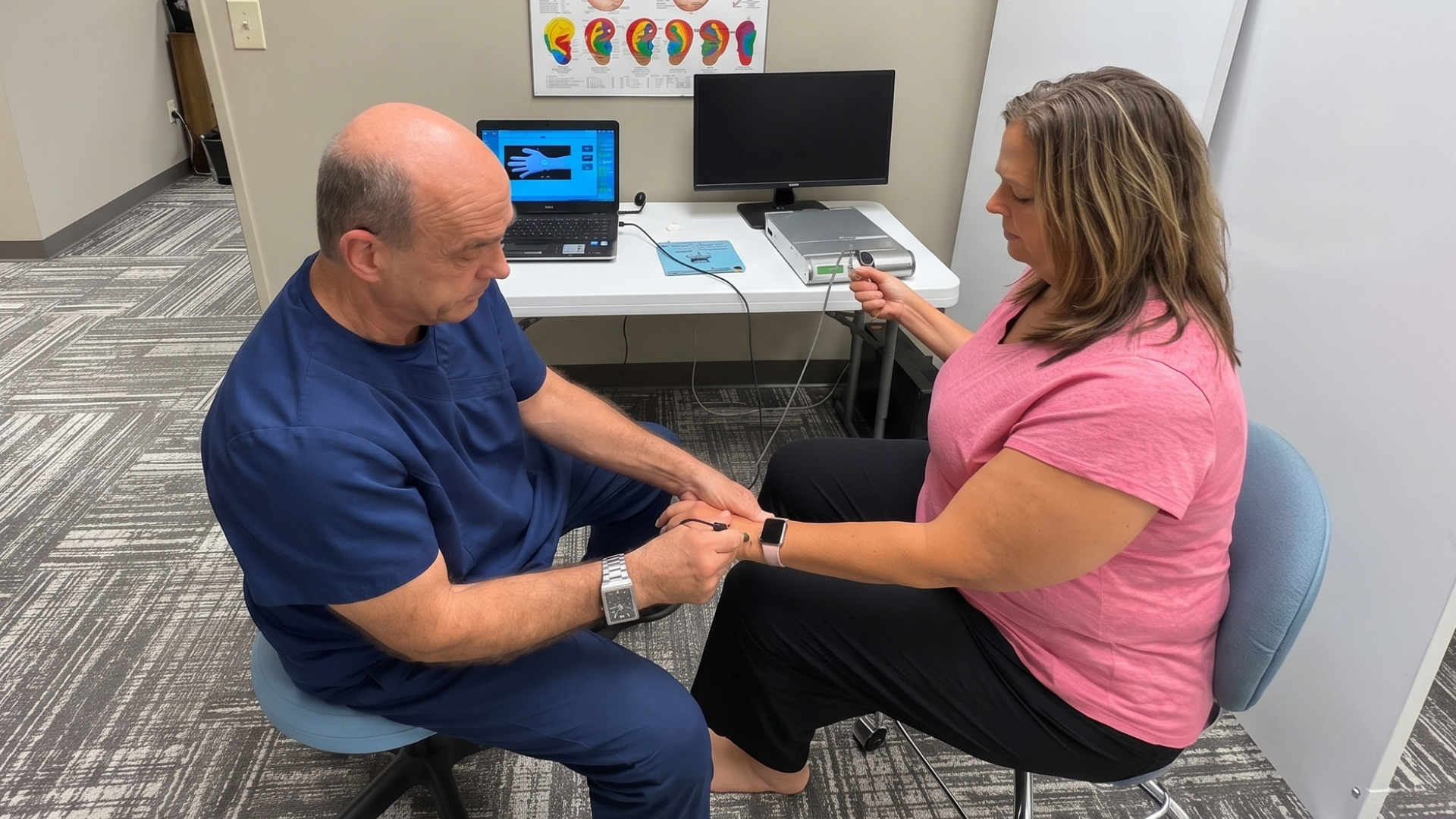
Dr. Thomas Eyrich in blue scrubs checks a seated patient’s wrist at a clinic desk.

Coordination Helps Prevent Overcomplication

Using multiple therapies does not mean doing everything at once.


In fact, good coordination often means simplifying the plan.


Some treatments may be tried first, while others are added only if they make sense. Progress can be reviewed over time, and the plan can change as symptoms improve, worsen, or shift.


That flexibility matters because a treatment plan that made sense three months ago may not be the best fit today.


A More Complete View of the Patient

With more than 46 years of clinical experience, Dr. Thomas Eyrich and Eyrich Natural Health and Healing take an integrated approach to care that can include chiropractic, acupuncture, naturopathic medicine, nutrition, massage, craniosacral therapy, spinal decompression, and other supportive services.


The goal is not to treat every symptom with a different therapy. It is to understand how the symptoms may relate, determine which approaches are appropriate, and coordinate care around the individual.


When several concerns are occurring at the same time, looking at the whole pattern can provide a clearer path forward than treating each complaint in isolation.


November 12, 2026
In modern times, most of us are under a lot of stress and being very busy. This puts quite a demand on our bodies to function properly and one of the most common problems today is hormonal imbalance. The hormones in your body are chemical messengers. They send signals to your tissues, glands, organs, and your brain. It is imperative to have proper hormonal levels to be healthy and strong. One of the best tests to uncover hormonal imbalances is a saliva hormone test . You simply spit into a vial and the vial is analyzed for all the different hormones. The advantage with using saliva is it only gives active hormone levels , which is what the doctor really needs to know. Unfortunately, most hormone testing done by medical practitioners is done by blood. Blood hormone testing is not accurate because it gives overall hormone levels not active hormone levels. For example, if we're measuring your estrogen level, blood will give a number. However, if some of that estrogen is bound to a protein, it is called inactive. Inactive hormones don't work. So the doctor cannot know on an estrogen lab value how much of that is active and how much of it is inactive. As I've said previously, only active hormone levels count. That is why saliva is a superior way to check hormones as it only gives active hormone levels. That's what we need to know. So when a patient comes to me from a medical practitioner, I have to redo the labs because I do not trust that the blood testing was accurate. I've gotten absolutely phenomenal results using saliva as a primary diagnostic tool for hormone imbalance testing.
November 3, 2026
The modern times in which we live bring a lot of stress and demands on our health. There is a trend of more heart attacks, strokes, diabetes, cancer, autoimmune disorders, and just general poor health due to these stressful times. I see a very important factor that contributes to this rising number of illnesses. And that is the topic of my article, Optimizing Physiology . Physiology in medicine means the way your body functions. We can look at this as how all the organs and glands function and how each system in your body functions, such as your cardiovascular system, your immune system, hormone or endocrine system, your nervous system, etc. To be in very good health all of these systems in your body must be working properly and when they are you feel very good. There is an absence of disease and illness. However, what is happening in our world is that the types of tests that medical practitioners run do not really monitor how optimal each system in your body is.
October 28, 2026
In modern times many patients complain of depression. I encounter this problem daily in my holistic practice of 47 years. Usually the scenario is the patient has been medically tested with blood exams, urinalysis, that type of thing and nothing is found that would cause depression. So the next step would be to guess giving drugs that affect the brain without really knowing which one would help that problem. Usually the results are not very good taking antidepressant medications.
October 22, 2026
So many of us live our lives not fully experiencing good health. Often being checked by medical doctors, doing standard blood exams and urine analysis reveals nothing important. You're told everything is fine. But, you think I have many symptoms of discomfort, such as fatigue, weight gain, poor digestion, pain in my back, headaches, stiffness, sleep problems, anxiety, high blood pressure, depression, hormone imbalances, etc. Your symptoms are accurate, but the testing methods are unable to register a problem until they become very severe.
October 16, 2026
When several symptoms overlap , it can be tempting to search for one treatment that explains or fixes everything. In reality, many people use more than one type of care at the same time. Massage therapy and craniosacral therapy are examples of complementary approaches that may be incorporated alongside chiropractic care, acupuncture, exercise, nutrition, conventional medical treatment, or other strategies depending on the individual. The key word is complementary . These therapies should be viewed as part of a broader plan rather than automatic replacements for medical evaluation or treatment. Massage Therapy Focuses on Soft Tissue Massage therapy works directly with muscles and other soft tissues. People commonly seek massage for tension, stiffness, soreness, relaxation, and general wellness. Research on massage is ongoing, but the National Center for Complementary and Integrative Health notes that massage may provide short-term benefit for some types of low-back, neck, or shoulder pain . It also emphasizes that the strength of the evidence varies by condition. That makes massage especially relevant when muscular tension is only one part of a larger symptom pattern. For example, someone receiving chiropractic care for mechanical back or neck discomfort may also use massage to address tight or tender muscles.
October 8, 2026
Getting eight hours of sleep should leave you feeling rested, but that does not always happen. Some people wake up feeling drained, foggy, or physically heavy even after spending enough time in bed. When that pattern keeps repeating, the issue may be less about sleep quantity and more about sleep quality, stress, health conditions, medications, or other factors affecting the body overnight. Persistent fatigue deserves a closer look, especially when rest does not seem to help. Sleep Quality Matters as Much as Sleep Duration Spending eight hours in bed does not guarantee eight hours of restorative sleep. Frequent awakenings, snoring, breathing interruptions, restless legs, pain, or insomnia can fragment sleep even if you do not remember waking up repeatedly. Sleep apnea is one example of a condition that can interfere with restorative sleep and leave people tired during the day. Mayo Clinic notes that sleep disorders are among the possible causes of ongoing fatigue.  This is why persistent morning fatigue should not automatically be dismissed as simply “not sleeping enough.”