
Depression a Common Problem

October 28, 2026

In modern times many patients complain of depression. I encounter this problem daily in my holistic practice of 47 years. Usually the scenario is the patient has been medically tested with blood exams, urinalysis, that type of thing and nothing is found that would cause depression. So the next step would be to guess giving drugs that affect the brain without really knowing which one would help that problem. Usually the results are not very good taking antidepressant medications.

A woman is lying on a gray couch, resting on a blue pillow with a yellow cushion behind.

What I look for in depression first of all if someone with low vitality or low energy. Often when our vitality is low we have a symptom of depression, but it is not really true depression it's simply lack of that vitality. The two most common glands that are responsible would be the thyroid and the adrenal glands. Sometimes a blood test will uncover the thyroid, but there are not many medical tests that will uncover adrenal gland fatigue and weakness. I diagnose adrenal fatigue almost daily it's a common problem nowadays. If you look up what the adrenals do they are very busy. They are extremely important, they sit on top of the kidneys. Through my years of practice  I have found that when I revitalize the adrenal glands my patients have amazing results. There is an immediate boost in energy, increased healing ability, swelling goes away, enthusiasm is restored, and even aches and pains in the body disappear. However, most medical practitioners do not know how to look for the adrenal in this gray zone that can't be diagnosed with blood testing. I have several types of tests that I utilize in my holistic practice to diagnose adrenal fatigue. That is a very common problem I recommend that you have a holistic doctor check you for this.
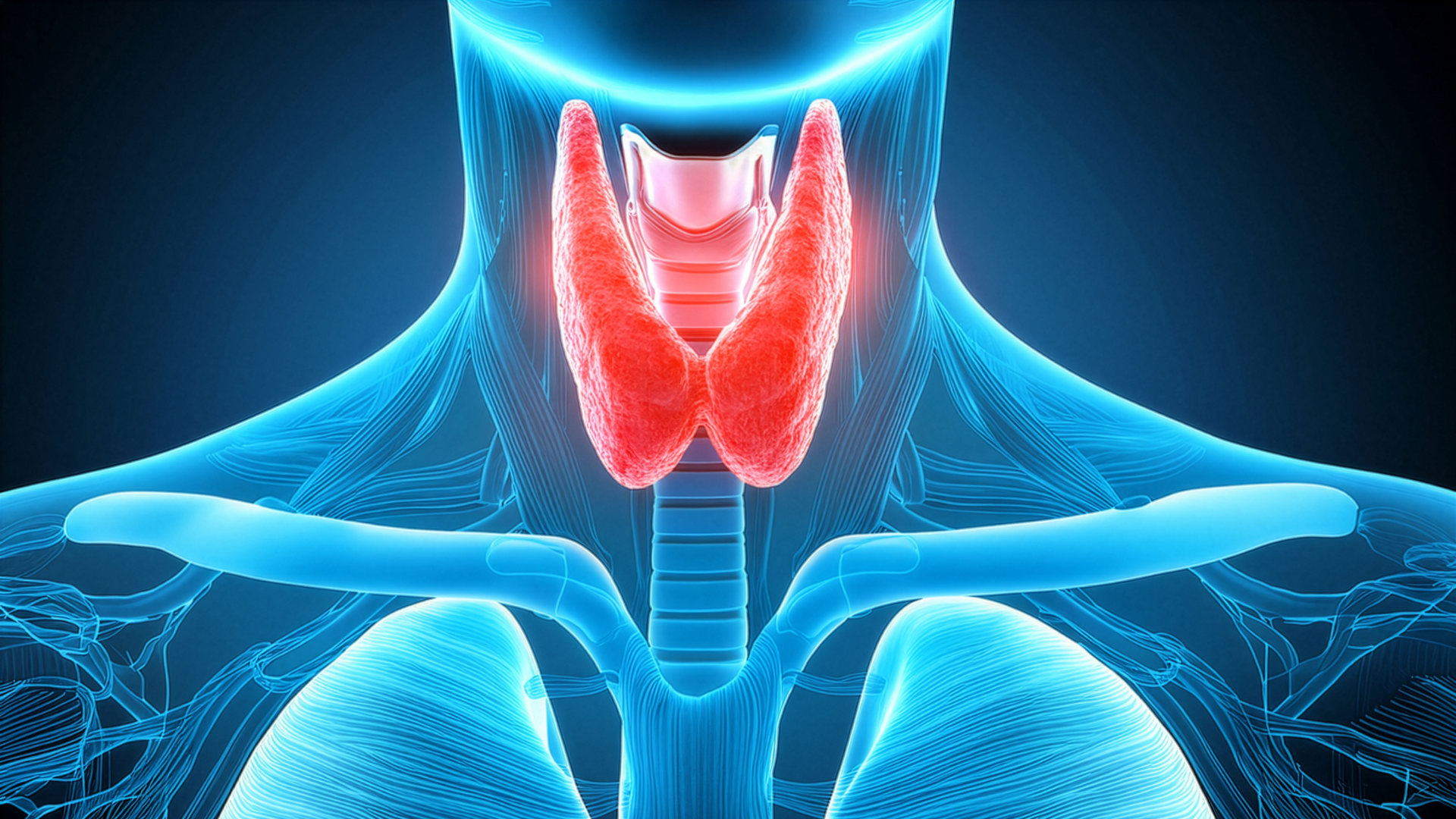
Blue medical illustration of a neck and shoulders with a glowing red thyroid gland highlighted

The other important gland that causes fatigue is a thyroid which can be diagnosed sometimes by blood testing. However, I disagree with immediately trying drug therapy such as synthroid as this is only T4 which is not the active hormone.  If your liver cannot conver T 4 to T3, you'll still be very tired. I think a better approach would be to first of all, check the nutrients that the thyroid needs such as iodine, selenium and the amino acid tyrosine. When these are supplied to the body, often, the thyroid will immediately start working better. I think natural therapy is far superior to drug therapy. We also have a product from Biotics that works extremely well for thyroid problems. One of the tests that I recommend is measuring the axillary temperature in the morning as this is a very good indicator of thyroid function. When I have patients do this that are on drug therapy, they still register low most of the time. This simply means that the drug is not working. Holistic therapy in my mind is more effective than the drug therapy for thyroid problems

gut microbiome

Other key factors that can be involved with depression are toxicity in the body, including chemical  poisons, heavy metal poisons, and many types of organisms that simply deplete the energies of the body. You will not recover your energy if these are not corrected. Medical practitioners do not look at these factors as a cause of depression. However, my practice does all the time. I diagnose which of these factors the patient has and eliminates them. This will restore amazing vitality to the patient.   


Another key factor would be making sure the blood sugar is in balance, making sure that the patient has the correct vitamins and minerals in their body because all the organs and glands need these nutrients to function. If the organs and glands are not functioning well that will cause depression. The main idea is patients will do well to see a good holistic doctor like myself to look at all the factors that medical practitioners miss and when these are addressed your energy will be restored and thus depression goes away. Looking forward to treating many of the patients that are suffering from depression that have not got this problem resolved yet! 

October 22, 2026
So many of us live our lives not fully experiencing good health. Often being checked by medical doctors, doing standard blood exams and urine analysis reveals nothing important. You're told everything is fine. But, you think I have many symptoms of discomfort, such as fatigue, weight gain, poor digestion, pain in my back, headaches, stiffness, sleep problems, anxiety, high blood pressure, depression, hormone imbalances, etc. Your symptoms are accurate, but the testing methods are unable to register a problem until they become very severe.
October 16, 2026
When several symptoms overlap , it can be tempting to search for one treatment that explains or fixes everything. In reality, many people use more than one type of care at the same time. Massage therapy and craniosacral therapy are examples of complementary approaches that may be incorporated alongside chiropractic care, acupuncture, exercise, nutrition, conventional medical treatment, or other strategies depending on the individual. The key word is complementary . These therapies should be viewed as part of a broader plan rather than automatic replacements for medical evaluation or treatment. Massage Therapy Focuses on Soft Tissue Massage therapy works directly with muscles and other soft tissues. People commonly seek massage for tension, stiffness, soreness, relaxation, and general wellness. Research on massage is ongoing, but the National Center for Complementary and Integrative Health notes that massage may provide short-term benefit for some types of low-back, neck, or shoulder pain . It also emphasizes that the strength of the evidence varies by condition. That makes massage especially relevant when muscular tension is only one part of a larger symptom pattern. For example, someone receiving chiropractic care for mechanical back or neck discomfort may also use massage to address tight or tender muscles.
October 8, 2026
Getting eight hours of sleep should leave you feeling rested, but that does not always happen. Some people wake up feeling drained, foggy, or physically heavy even after spending enough time in bed. When that pattern keeps repeating, the issue may be less about sleep quantity and more about sleep quality, stress, health conditions, medications, or other factors affecting the body overnight. Persistent fatigue deserves a closer look, especially when rest does not seem to help. Sleep Quality Matters as Much as Sleep Duration Spending eight hours in bed does not guarantee eight hours of restorative sleep. Frequent awakenings, snoring, breathing interruptions, restless legs, pain, or insomnia can fragment sleep even if you do not remember waking up repeatedly. Sleep apnea is one example of a condition that can interfere with restorative sleep and leave people tired during the day. Mayo Clinic notes that sleep disorders are among the possible causes of ongoing fatigue.  This is why persistent morning fatigue should not automatically be dismissed as simply “not sleeping enough.”
September 29, 2026
Stress does not always stay in the mind. For some people, prolonged stress may accompany muscle tension, headaches, poor sleep, digestive discomfort, fatigue, jaw clenching, or a general feeling of being unable to relax. Because these symptoms can overlap with many different health concerns, effective stress management often involves more than one strategy. Acupuncture is one complementary approach that some people choose to include alongside appropriate medical care, healthy routines, exercise, relaxation practices, or counseling. At Eyrich Natural Health and Healing, acupuncture can be considered as one part of a broader, individualized wellness plan. Acupuncture Takes a Whole-Person Approach Acupuncture involves inserting very fine needles at specific points on the body. It originated within traditional Chinese medicine and is now used in many countries as a complementary health practice. The National Center for Complementary and Integrative Health notes that acupuncture is most commonly used in the United States for pain-related concerns . During a visit, the practitioner may also ask about sleep, digestion, energy, pain, stress patterns, and other symptoms.  That wider conversation can be useful when several concerns seem to occur together.
September 22, 2026
Stress is often treated as something purely emotional, but the body can respond to it in physical ways. Muscle tension, digestive changes, headaches, fatigue, and sleep problems can all appear during periods of prolonged stress. The National Institute of Mental Health notes that stress and anxiety can affect both the mind and body, including tension, body pain, and loss of sleep. Ongoing anxiety can also affect digestive and other body systems. When pain, digestive discomfort, and poor sleep begin appearing together, it may be helpful to look at the broader pattern rather than treating each symptom as completely separate. Muscle Tension Can Build Gradually Stress can cause muscles to remain tighter than usual. Some people notice this first in the jaw, shoulders, neck, or lower back. Others may not realize how tense they are until discomfort has been present for several days. Cleveland Clinic lists muscle tension, jaw clenching, headaches, aches, and pains among common physical symptoms associated with stress . When muscles stay tense for long periods, normal movements and postures may begin feeling uncomfortable. That does not mean every pain problem is caused by stress. Structural, neurological, inflammatory, or other medical causes may also need to be considered.
September 20, 2026
Feeling a little sleepy after a large meal can be normal. But if certain foods repeatedly leave you unusually tired, mentally foggy, shaky, bloated, or unable to concentrate, it may be worth looking more closely at the pattern. Post-meal fatigue can have several possible causes, including meal size and composition, sleep quality, blood sugar changes, digestive problems, and food intolerances. Cleveland Clinic notes that postprandial sleepiness can develop from about 30 minutes to several hours after eating and may temporarily reduce mental alertness . Meal Composition Can Affect Energy What you eat can influence how you feel afterward. Meals that are especially large or rich in refined carbohydrates may be followed by a noticeable dip in energy for some people. Cleveland Clinic notes that both meal size and the balance of carbohydrates and protein can contribute to post-meal sleepiness . That does not mean carbohydrates or protein are inherently problematic. The more useful question is whether the same type of meal consistently produces the same symptoms. A food-and-symptom diary can help reveal those patterns.